



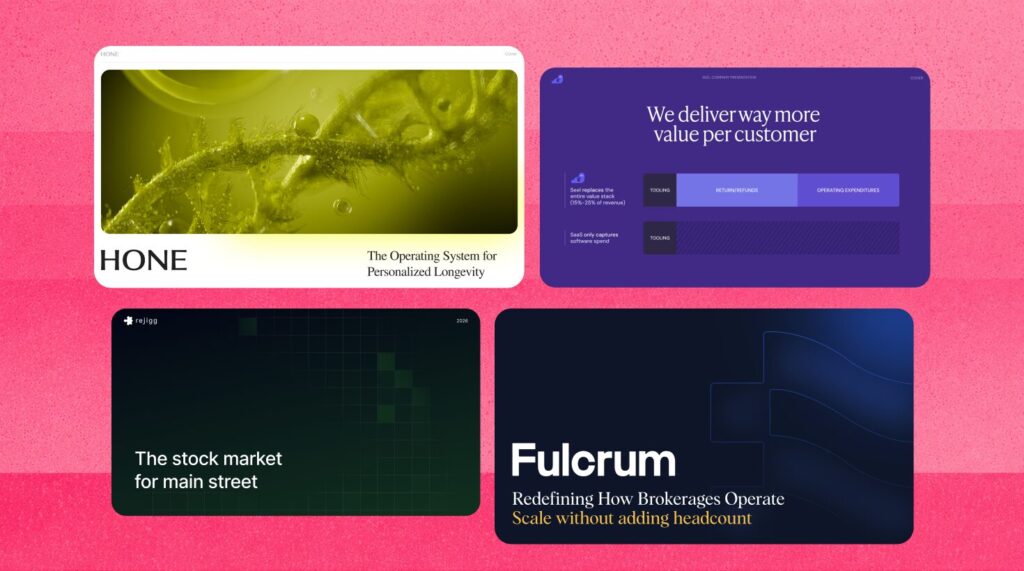
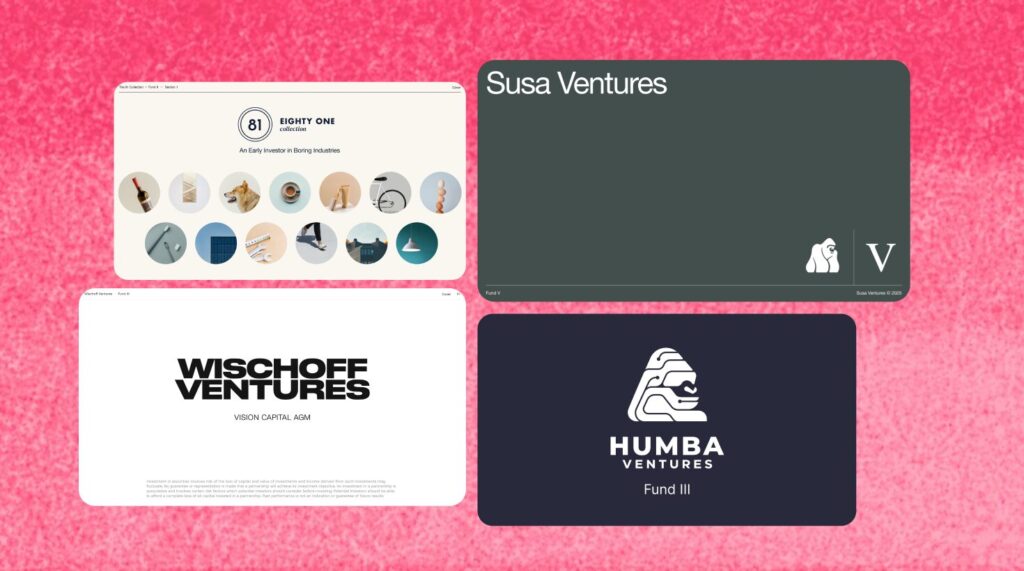
We’ve helped several companies such as Seel, Hone, and Fulcrum with company raising decks, as well as a handful of funds like Wischoff Ventures, 81 Collection, and Winterfell Capital.
Most of our deck work is with founders trying to raise a seed, a Series A, or a Series B or even Series C. We also do a lot of decks for funds raising from LPs, and we have built enough of both to see the differences and similarities between them.
Where leads come from
Most deck projects begin with an intro from a fund or a company we previously helped. Our process and pricing are public at eatcaviar.co/decks, so a referred client can see how we work and what it costs before the first call. The decks themselves stay confidential. When a client asks to see work, we share a previous deck or one we have permission to show.
From there, the first question we answer is whether we are helping with the content and structure, including the ordering of the slides, or just designing around copy the client has already confirmed. More often than not, the client has the copy ready, although recently we have been helping with storytelling and copywriting more often. If we are building the content, that becomes the first piece we start on.
Our first move
When we own the content, we gather information about the company, from the team and the stats to the story and the goals it wants to project. When the client already has their copy, we move straight to collecting brand materials.
Either way, the design starts in the same place. We build the title slide and a few content slides before touching anything else to make sure we are moving in the right direction aesthetically. There is no point designing fifteen more slides in a style the client has not yet reacted to. Those first slides lock the direction, and the hardest slides in the deck get built early for the same reason.
Working sessions
The sessions do not always happen in person. Sometimes we fly up, sometimes we drive, and sometimes the client joins on Zoom, but the in-person ones do help. Either way, by the time we sit down with a founder, they have usually been staring at the deck and talking about it for weeks, if not months, with plenty of advice along the way. We see it with a fresh set of eyes, and a large part of the value of the session is the dialogue around what we notice first.
In a session, we talk about where the deck currently stands and the challenges it faces. We work through the harder slides together, discuss the graphics that need to be incorporated, and sometimes end up brainstorming at a whiteboard.
The sessions are also where outside opinions show up. More often than not, a founder will talk with people outside the project, like board directors, and come back with feedback that detours the story or a graphic we are working on. By that point, the harder slides and graphics already exist, so most of those edits land as copy edits. We rarely have to redesign a graphic from the ground up. Even when a slide does need to change, most of the work is already done, and it becomes a matter of adjusting elements like iconography, layout, text, or the graphic itself.
Decks for founders
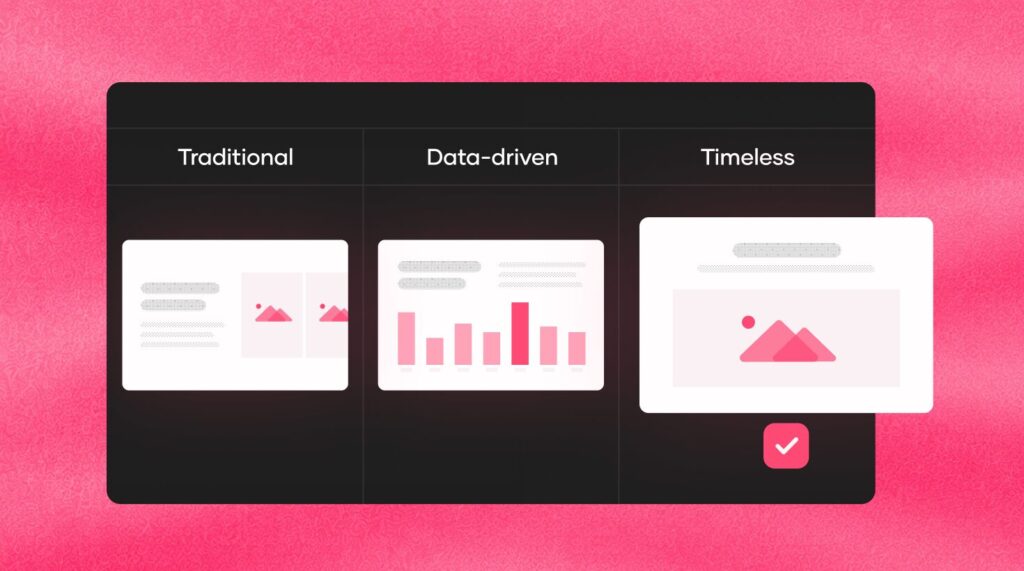
Most founder-made decks are bad for predictable reasons. Founders are involved in the company day to day, and they pack the deck with much more content than is needed and information they think the other side of the table wants to hear. The simpler decks we have done, a clean graphic paired with minimal text, are the ones that performed the best. That approach is behind Seel raising $17M, Hone raising $33M, and Fulcrum raising $25M.
Decks for funds
What separates a fund deck is the stats. There are a lot more of them than in a company deck. On top of the numbers, there has to be a storytelling slide, a very creative one, that answers why that fund is the right fund. And the whole deck needs a very clear theme around why they are the perfect fund to invest in the category they selected.
Case studies are very important here. Storytelling backed by real stats and facts is just as important, and those two together are often the difference between a fund deck that works and one that does not.
Speed is a must
The clearest proof is Hone. We built the deck in three days. I worked on Friday, Saturday, and Sunday to get through 15+ slides. We tweaked it in Google Slides on Monday and Tuesday, and the founder took that same deck out and raised $33M with it.
A lot of the time, decks move because of speed. The job is moving fast, understanding the story, and making sure the brand stands out and does not look like it was generated by an AI slop machine. That holds whether the room is VCs or LPs.

Both sides of the table
We enjoy the work we do on both sides of the table. If you are raising a round or raising a fund, we would like to help you tell that story.